Summer of the Tall Goldenrod
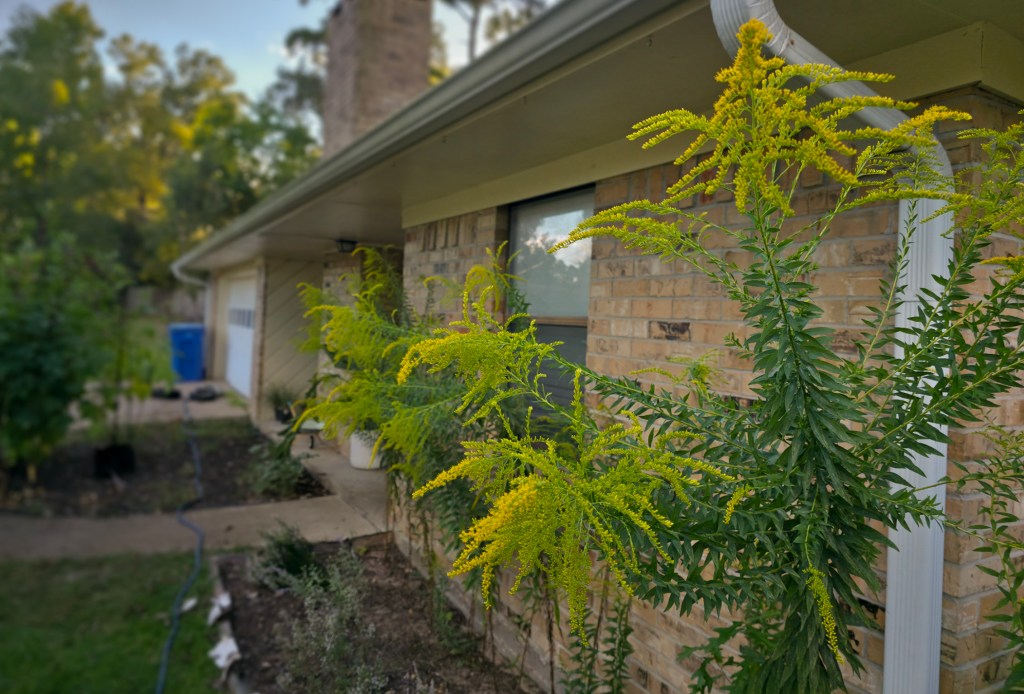
Solidago altissima, commonly known as Tall Goldenrod, is a perennial wildflower native to North America and can be found growing naturally throughout East Texas. In late spring of this year, while clearing the fence line along the back of my yard, I discovered a small group of Solidago altissima thriving where sunlight filtered through the canopies of the oak and pine trees that border the area. Curious to see if they could adapt to a new environment, I wondered whether I could successfully transplant them into a flower bed in front of my house that receives full sun during the summer but shifts to mostly shade as fall approaches.
As a member of the Asteraceae family, the same as Sunflowers (Helianthus), Zinnia, and Black-eyed Susan (Rudbeckia), the inflorescence of the Tall Goldenrod is made of many flowers that are comprised of rays (the outer, petal like flowers), and the discs (the inner tube-shape florets.)
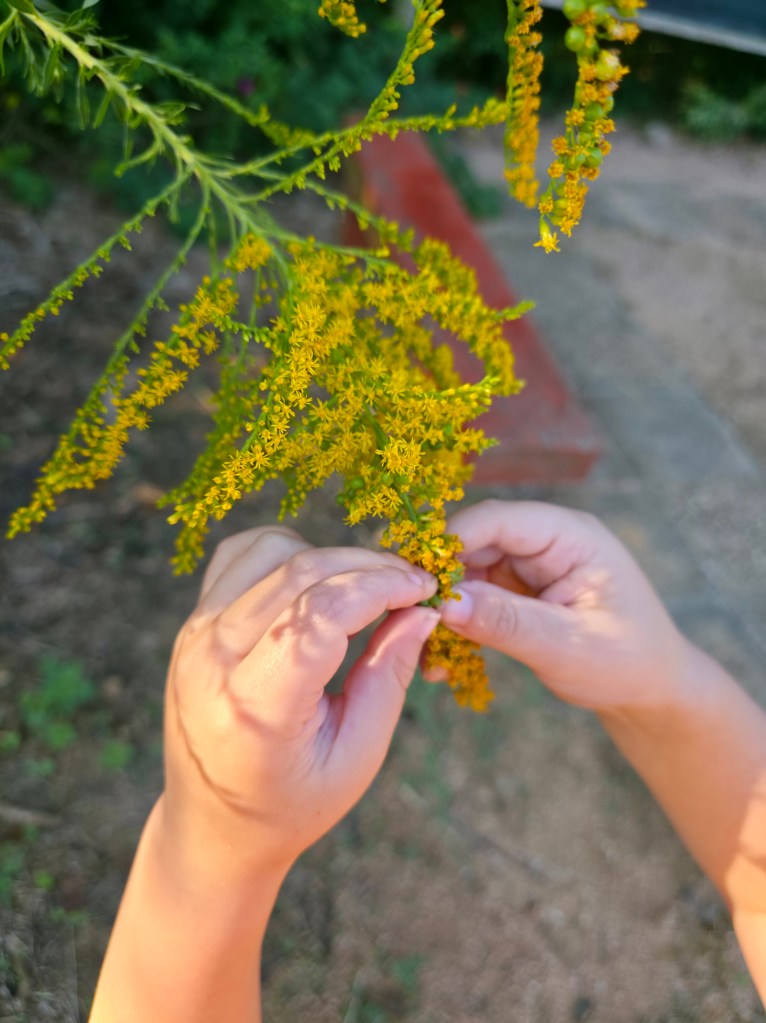
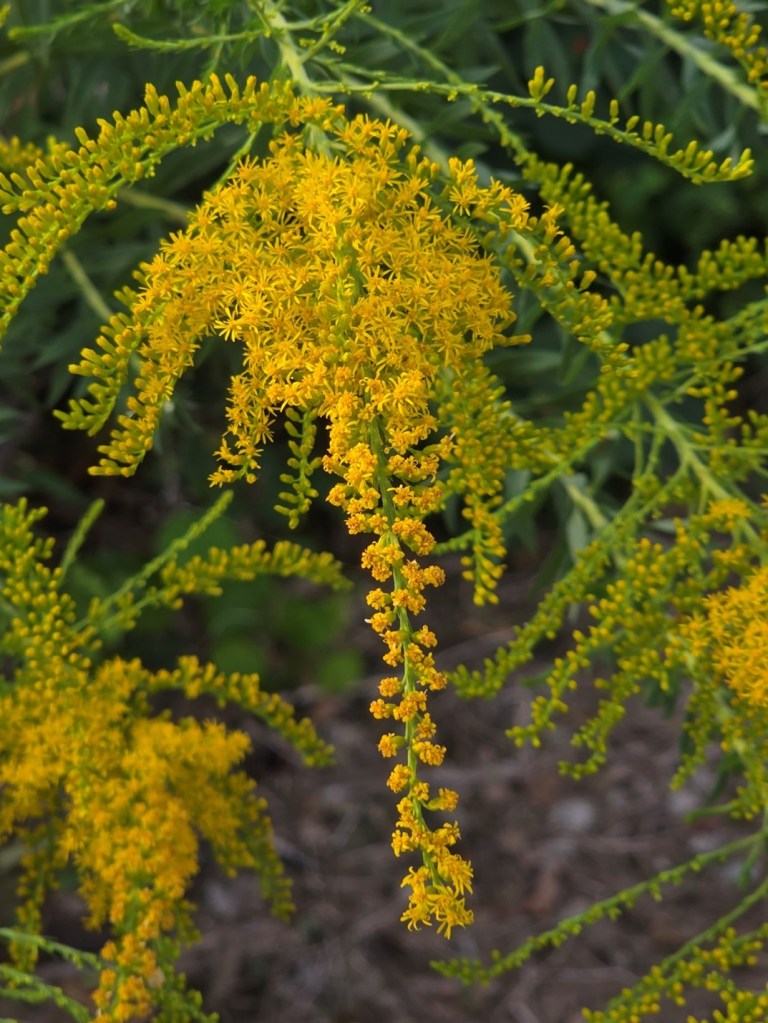
Solidago altissima thrives in dry soil and in conditions ranging from full sun to partial shade. Since my yard has sandy-clay soil and with a hot Texas summer on the way, I wanted to observe how well the plants would perform without fertilizer and with only natural rainfall for water. When tending to the other plants in the bed, I watered close to their bases, where I had mixed compost with the original potting soil to improve water retention in the compact sandy soil. I was careful not to intentionally water the Tall Goldenrods, allowing them to adapt on their own. By late summer and into fall, with August averaging about 4.25 inches of rain and September only 0.92 inches, they had grown to their typical height of around six feet, with some going over and beginning to lean forward! I was informed for next season, to cut them back about 1/3 of the way in early summer to promote a bushier growth and help prevent this in the future.

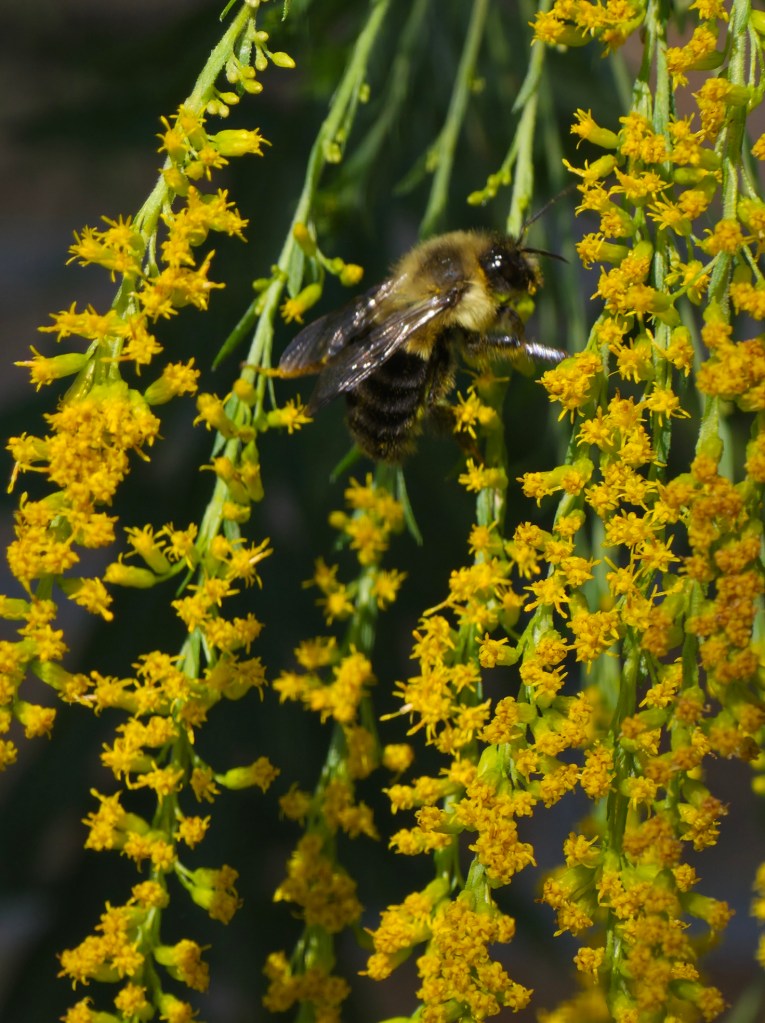
From late September through the second week of November, Solidago altissima and its bright yellow flowers hosted a remarkable diversity of insects, arachnids, and pollinators. In the early mornings, bees could be seen diligently moving from flower to flower, collecting nectar and pollen. As the day warmed, a variety of other pollinators, such as wasps, flies, and moths, joined in on the nectar while helping to spread pollen across the goldenrod’s dense clusters of blooms.
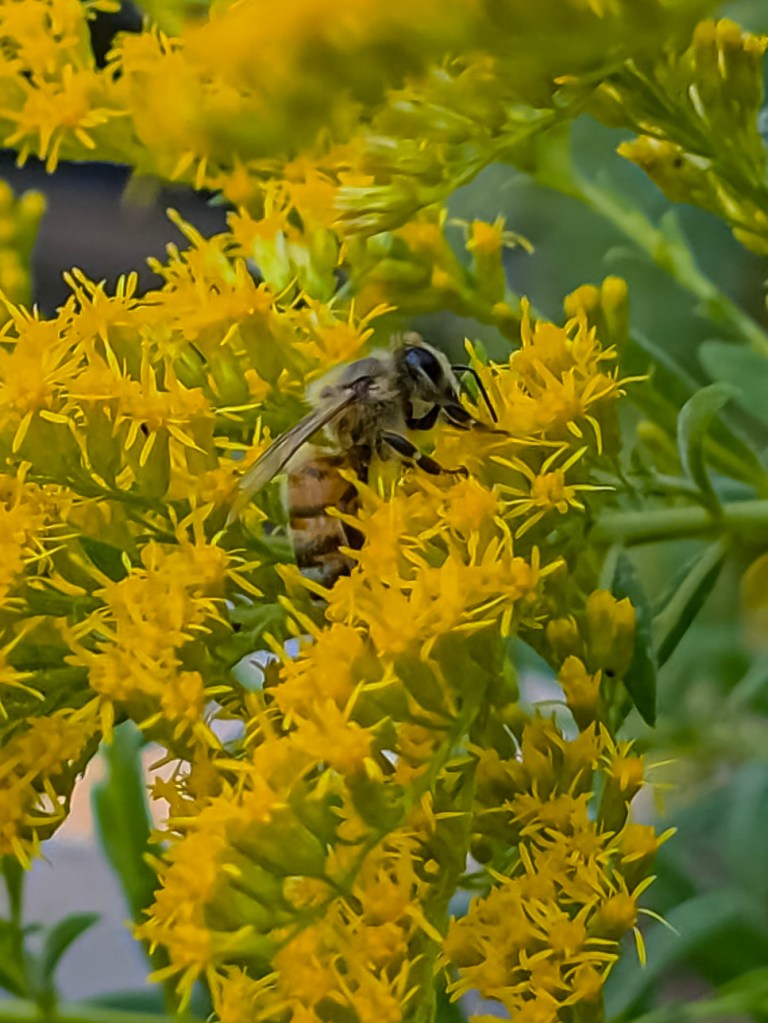
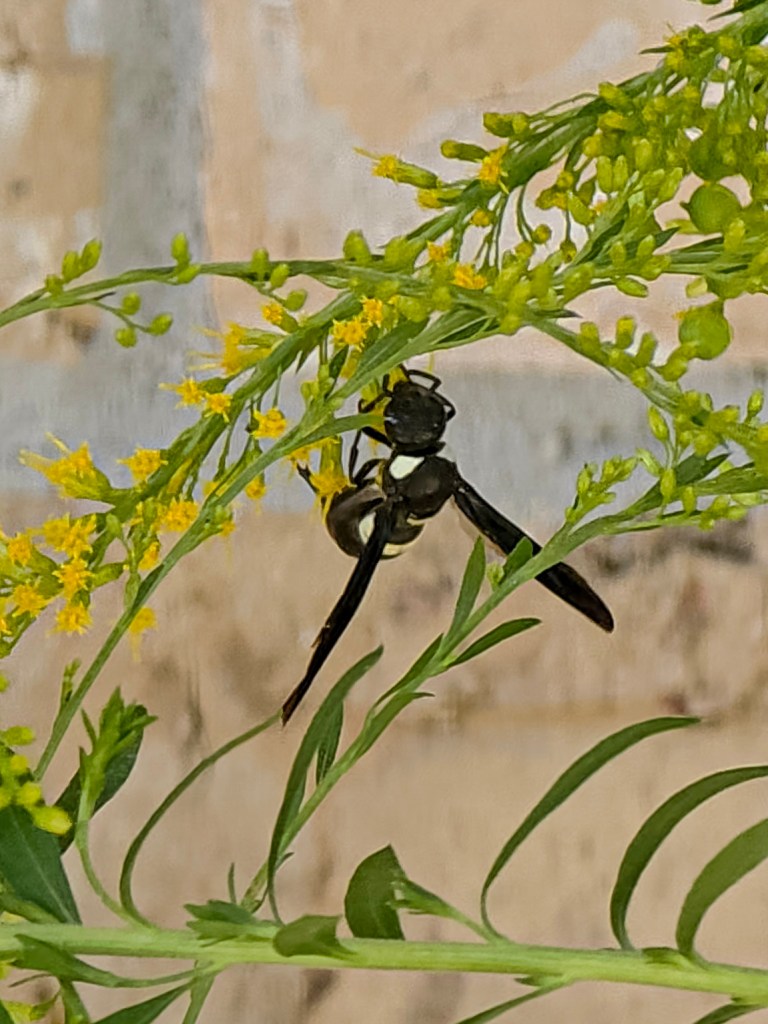
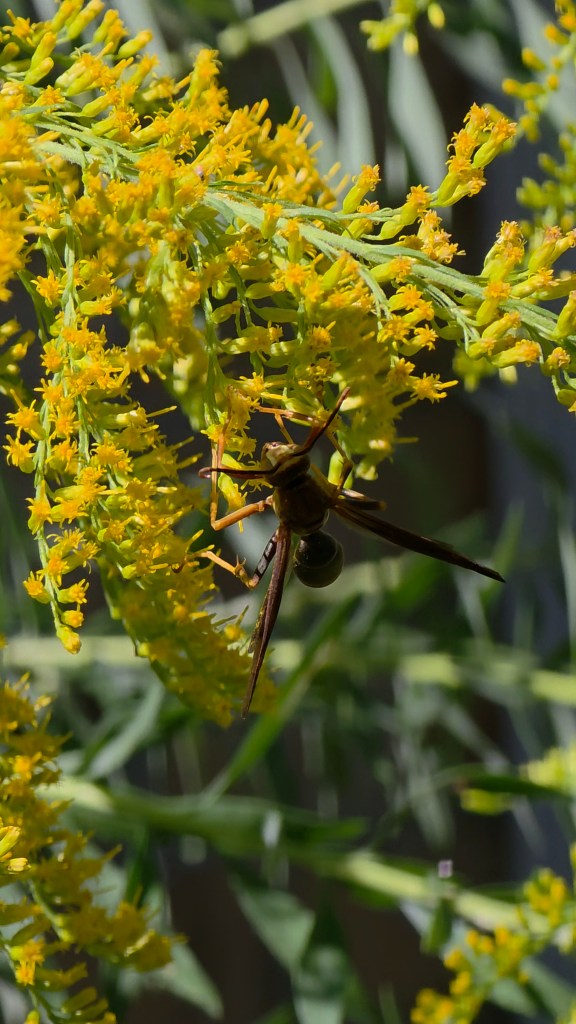
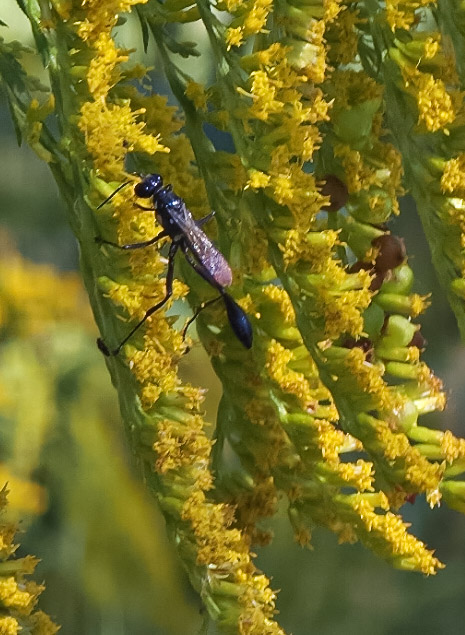
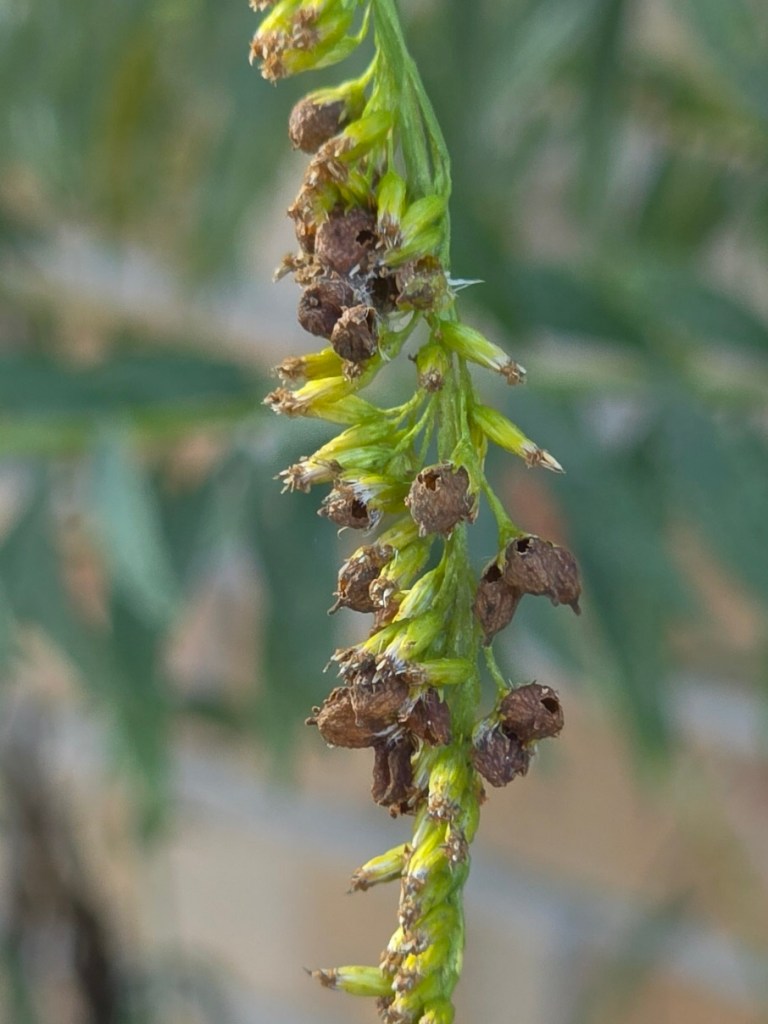
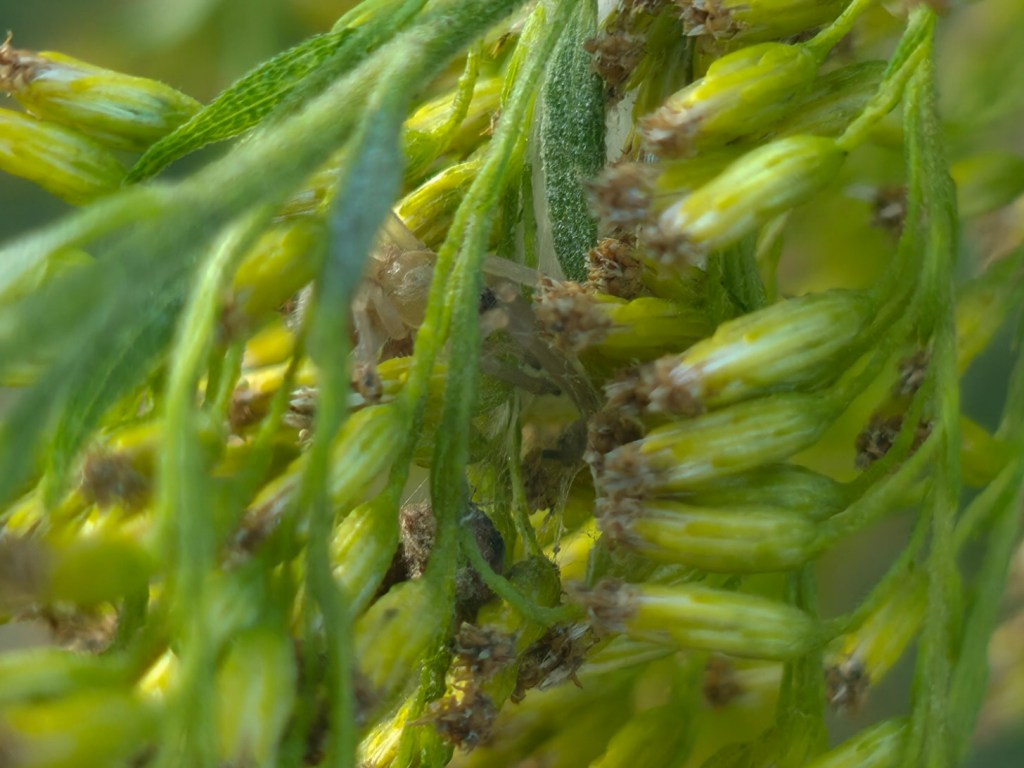
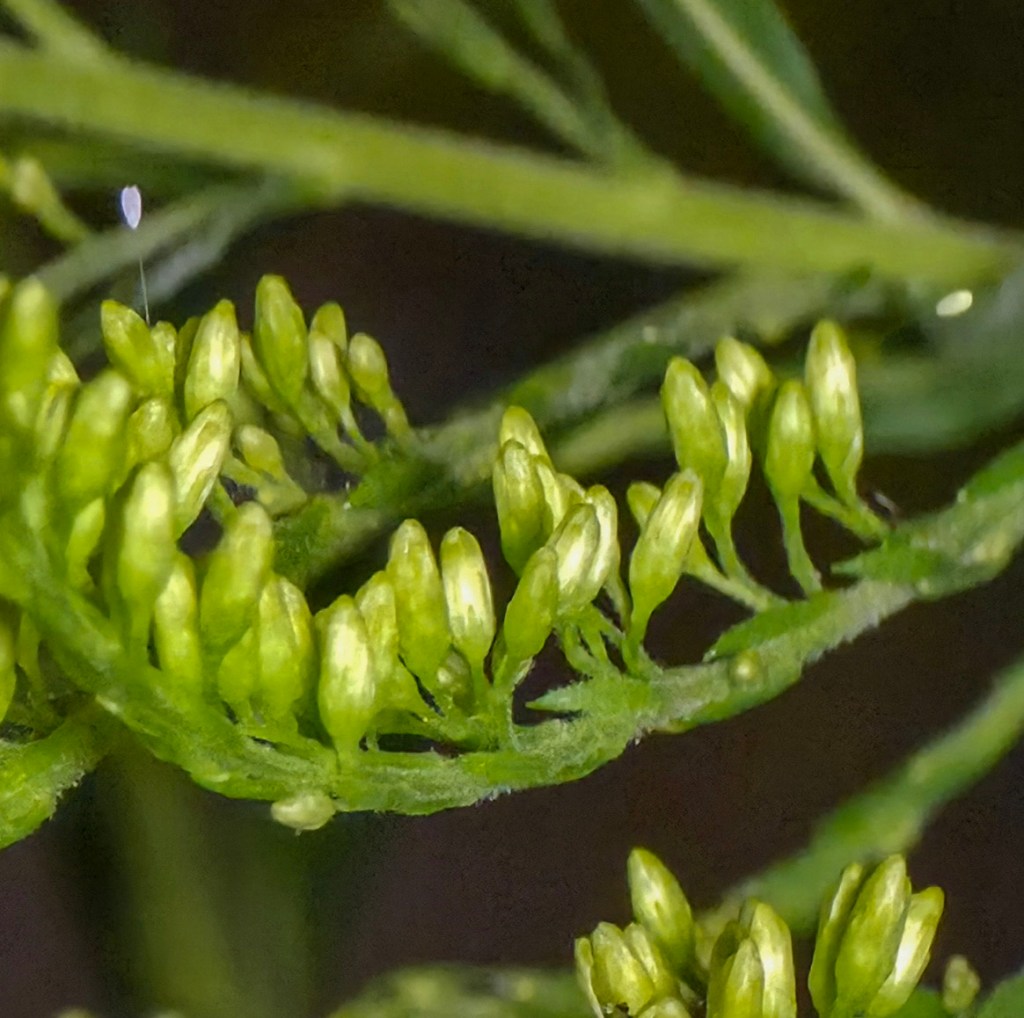

Now, with the first freeze of the season upon us, the flowers of Solidago altissima have transformed from their magnificent abundance of golden yellow into clusters of soft white seeds, waiting to be carried away by the wind, by birds, or even by my jacket, to find new places to call home!


 Between Pine and Petal
Leave a comment